How My Role in My Spiritual Formation Is Like Farming
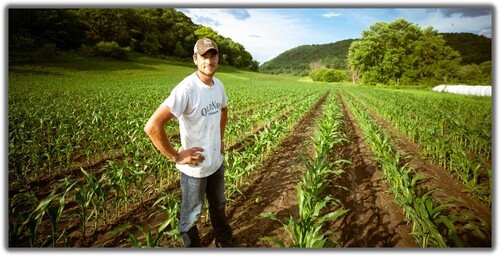
Photo by Gregory Hayes on Unsplash*
Spiritual formation is a hot topic these days. Names like Dallas Willard, John Mark Comer, Richard Foster, and Kyle Strobel keep cropping up, and with good reason. People want to know how we grow in Christ. We know that the Spirit is at work to form Christ in us and that He will finish that work (Phil 1:6), but we want to know what part we must play in that sanctifying process.
This has led me to consider our need to cultivate two essential internal postures in the heart of a growing disciple of Jesus. When one or more of these internal postures is lacking, any outward indicators of spiritual maturity are performative at best.
I use the word “cultivate” to counter two false assumptions. Just as the farmer cannot assume that healthy crops will grow apart from his hard work…
My “internal posture” is my mindset, my frame of reference. If I am a growing disciple of Jesus, I cannot allow my internal posture to be determined by my circumstances or my current emotional state: I must steadily cultivate my internal posture over time.
So, what are the two internal postures I must cultivate?
1. A growing disciple will cultivate an inward posture of listening to God.
Remember the story of God’s call on the life of young Samuel (1 Sam 3). In the night, God called the boy, and Samuel thought it was old Eli calling for him. He went to see what Eli wanted, only to be told that he had not been summoned. But God kept calling, and Samuel kept going to Eli. Finally, Eli realized that his young protégé was hearing from Yahweh Himself! He told Samuel that the next time he heard the call, he was to say, “Speak, Lord, for your servant is listening.”
This listening posture wasn’t just for Samuel in that critical moment: it is for all of God’s people at all moments. Primarily, we must assume that listening posture when we engage with Scripture. We all know what it’s like to read the Bible mindlessly and check the box. In that kind of exercise, we have no intention of hearing from God, only accomplishing a task. If I want to hear from God in His Word, I must set my heart in a listening posture as I come to the Scripture.
But we need to cultivate a listening posture even when we are not engaging with Scripture. God whispers to His own in other ways as well: through the wise counsel of a godly friend, in the odd coincidence of common themes that keep coming up in things we read and hear throughout the week, in the exquisite beauty of His creation, in those delightful moments when He provides for us before we know we have a need, in that subtle inner communication of His Spirit in our inmost being.
There is an important caveat here: because of the corruption of our own hearts and the hearts of others, not everything we think we hear from God is wise and good and true. So, hearing from God will always call not just for attention but also discernment. Whenever we think we are hearing from God, we must heed the word of the Apostle Paul in his first letter to the church in Thessalonica: “Test everything; hold on to what is good” (1 Thess 5:21).
2. A growing disciple will cultivate an inward posture of assertive surrender.
I use the word “surrender” because growing in Christ isn’t something I achieve, it is something I receive as I surrender to God and His purposes. And assertive because this surrender is not passive, it is active and persistent (see farmer analogy above). As I wrote in another post (“Seeking God: Full Time Work”), this is not a one-time or part-time endeavor. I must constantly ratify my decision to surrender to the will of God.
We must assume this posture of surrender for the same reason the farmer prays for rain. If he wants a good crop, the farmer must work hard. But he knows that regardless of how well he does his work, he is dependent on forces beyond his control. In our own spiritual formation, we too must work hard, but we must never imagine that we can by our own effort and merit make ourselves grow spiritually.
Because none of this comes naturally, I must play an active role in cultivating these two internal postures: listening for God’s voice and actively surrendering to His leading.
But because this isn’t an either-or matter, my progress in cultivating these internal postures will be uneven and sometimes discouraging. That’s why it’s such good news that the responsibility for getting me to the finish line is not mine but God’s. He sees my heart, with all its hesitation and contradictions, and He is both gracious and persistent.
He will bring me home.
All the more reason to persevere.
*I chose this photo in part because it reminds me of our own Will Everett, a young farmer in our fellowship. You should try his eggs.
This has led me to consider our need to cultivate two essential internal postures in the heart of a growing disciple of Jesus. When one or more of these internal postures is lacking, any outward indicators of spiritual maturity are performative at best.
I use the word “cultivate” to counter two false assumptions. Just as the farmer cannot assume that healthy crops will grow apart from his hard work…
- …I cannot assume that a healthy internal posture will come naturally.
- …I also cannot assume that I simply wait for God to bless me with grace apart from my active cooperation.
My “internal posture” is my mindset, my frame of reference. If I am a growing disciple of Jesus, I cannot allow my internal posture to be determined by my circumstances or my current emotional state: I must steadily cultivate my internal posture over time.
So, what are the two internal postures I must cultivate?
1. A growing disciple will cultivate an inward posture of listening to God.
Remember the story of God’s call on the life of young Samuel (1 Sam 3). In the night, God called the boy, and Samuel thought it was old Eli calling for him. He went to see what Eli wanted, only to be told that he had not been summoned. But God kept calling, and Samuel kept going to Eli. Finally, Eli realized that his young protégé was hearing from Yahweh Himself! He told Samuel that the next time he heard the call, he was to say, “Speak, Lord, for your servant is listening.”
This listening posture wasn’t just for Samuel in that critical moment: it is for all of God’s people at all moments. Primarily, we must assume that listening posture when we engage with Scripture. We all know what it’s like to read the Bible mindlessly and check the box. In that kind of exercise, we have no intention of hearing from God, only accomplishing a task. If I want to hear from God in His Word, I must set my heart in a listening posture as I come to the Scripture.
But we need to cultivate a listening posture even when we are not engaging with Scripture. God whispers to His own in other ways as well: through the wise counsel of a godly friend, in the odd coincidence of common themes that keep coming up in things we read and hear throughout the week, in the exquisite beauty of His creation, in those delightful moments when He provides for us before we know we have a need, in that subtle inner communication of His Spirit in our inmost being.
There is an important caveat here: because of the corruption of our own hearts and the hearts of others, not everything we think we hear from God is wise and good and true. So, hearing from God will always call not just for attention but also discernment. Whenever we think we are hearing from God, we must heed the word of the Apostle Paul in his first letter to the church in Thessalonica: “Test everything; hold on to what is good” (1 Thess 5:21).
2. A growing disciple will cultivate an inward posture of assertive surrender.
I use the word “surrender” because growing in Christ isn’t something I achieve, it is something I receive as I surrender to God and His purposes. And assertive because this surrender is not passive, it is active and persistent (see farmer analogy above). As I wrote in another post (“Seeking God: Full Time Work”), this is not a one-time or part-time endeavor. I must constantly ratify my decision to surrender to the will of God.
We must assume this posture of surrender for the same reason the farmer prays for rain. If he wants a good crop, the farmer must work hard. But he knows that regardless of how well he does his work, he is dependent on forces beyond his control. In our own spiritual formation, we too must work hard, but we must never imagine that we can by our own effort and merit make ourselves grow spiritually.
Because none of this comes naturally, I must play an active role in cultivating these two internal postures: listening for God’s voice and actively surrendering to His leading.
But because this isn’t an either-or matter, my progress in cultivating these internal postures will be uneven and sometimes discouraging. That’s why it’s such good news that the responsibility for getting me to the finish line is not mine but God’s. He sees my heart, with all its hesitation and contradictions, and He is both gracious and persistent.
He will bring me home.
All the more reason to persevere.
*I chose this photo in part because it reminds me of our own Will Everett, a young farmer in our fellowship. You should try his eggs.
Recent
How My Role in My Spiritual Formation Is Like Farming
September 18th, 2026
The “Normandy Invasion” of Human History
September 11th, 2026
Reading the Bible with Older Eyes: Two Books That Have Helped Make Sense of Scripture
September 4th, 2026
In Christ “Must” Has Become “Can”
August 28th, 2026
What about When God Commands His People to Destroy Their Neighbors?
August 21st, 2026
Archive
2026
January
February
March
April
May
June
July
August
2025
January
February
March
April
May
July
August
September
October
November
2024
January
February
March
Categories
no categories