
Four Ways Efficiency Is Counterproductive in Our Spiritual Formation
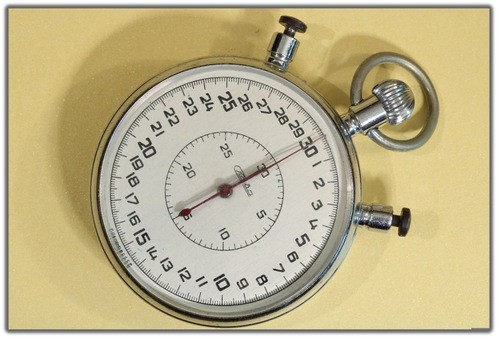
Image by Pixabay
I heard once about a native worker who said to an American missionary, “I’ve noticed that you Westerners like to perfect your technique and measure things.” He was right. It is baked into our DNA to seek the most efficient way to do something – which means reducing it to metrics – so that we can replicate it elsewhere.
While striving for efficiency is admirable, even necessary in some endeavors, our urge to be efficient can be counterproductive in some other crucial arenas of life. I think there are at least four ways efficiency can be counterproductive in our spiritual fruitfulness. (And here I must credit two of the men I discipled: I first discussed this with Don Lewis and Nathan Rude, who helped me compile this list.)
1. Efficiency is the counterproductive in evangelism.
It’s true that spiritual birth is the work of a moment. Jesus himself coined the phrase “born again.” But if we think of evangelism as an event, it’s easy to apply all the measures of efficiency to the process: what’s the most efficient way to get someone to the point where he or she can receive Christ?
But evangelism is a subset of the long-term progression of disciple-making. And disciple-making is a process, not an event. Evangelism in my sphere of influence – my workplace, my school, my neighborhood – means I must cultivate friendships so that I can create the depth and space necessary for a spiritual conversation to take place naturally.
If I turn my evangelism into an exercise in efficiency, I turn my friendships into projects. That’s not loving my non-Christian neighbors; it’s using them to achieve a goal.
2. Efficiency is counterproductive in family life.
The family is the perfect arena for disciple-making. The intimacy of living together exposes our sinful hearts, and God uses the hurly-burly of family life to rub off our rough edges. A Christian husband and wife are a brother and sister in Christ discipling one another. Christian parents not only want to discipline their children (that is, prepare them for adulthood), they also want to disciple their children (live and proclaim the gospel before them so that they can respond in faith).
But because we are all sinful, self-absorbed creatures, the relationship-building that sustains family life is nonlinear; our brokenness ensures that when we do make progress in relationships – in our marriages, in our parenting – it is a herky-jerky, three-steps-forward-two-steps-back kind of progress. Not efficient.
Parents must remember that they are playing the long game. Successful parenting is never about how well you and your children are doing in the moment; it’s about trajectory. And we help our children set that trajectory not so much in dramatic turning points as in dozens of interactions every day, in the habits and customs that make up our family culture.
That same long-term approach applies to marriage, which is shaped not so much by dramatic, romantic gestures as by daily habits of encouragement, patience, and service. If the three most important words in marriage are “I love you,” the four most important words might be “How can I help?”
I must abandon efficiency if I want to cultivate meaningful relationships in my family.
3. Efficiency is counterproductive in our spiritual disciplines.
I saw a book on worship that was titled A Royal Waste of Time. That’s what worship is: it is a waste of time because in the time we set aside for worship, we must temporarily abandon our quest for productivity, and it is royal because we are dedicating that time to the worship of the King of the Universe.
Given our drive for productivity, it’s easy to see why we sometimes grow restless at the thought of the time we devote to worship, our Sunday gatherings and our time alone with God during the week: what am I accomplishing here? There are things that need to be done!
No, said Jesus to Martha. Mary got this right. Growing in Christ isn’t about productivity; it’s about the long, slow process of sitting at his feet in worshipful attention and learning.
4. Efficiency is counterproductive in healing and restoration.
In my counseling of men in troubled marriages, I have drilled down on a slow, deliberate four-step strategy:
1. Love your wife from a distance (whether that be physical or emotional or both).
2. Trust God to heal her wounded heart.
3. Be patient with the non-linear process; don’t interpret a setback as a catastrophic failure.
4. Celebrate small victories.
The same thing is true in our fellowship as we move forward in this situation.
The grief we are experiencing is not unlike bereavement. I told my wife that I feel as if I’m falling and flailing as I tumble downward. We all feel that way, just trying to comprehend what has happened and what it means to our fellowship.
Now we face the long slog of reorienting, reorganizing, and recalibrating – regaining our footing. We cannot expect quick results in this recovery. There are landmines everywhere, and we must be cautious and deliberate as we navigate the difficult and dangerous weeks ahead.
In other words, we cannot expect this recovery to be efficient. And we will be more likely to compound the error and pain if we are impatient with the process.
The elders have always known that we need His wisdom to lead our fellowship, but we are most keenly aware of our inadequacies right now. Pray for us as we talk and pray and plan for the changes that must be made. Pray that God’s Spirit will keep us from blunders and blind spots.
Let us be patient with the slow, inefficient process that is our spiritual formation.
And let us, as always, persevere.
While striving for efficiency is admirable, even necessary in some endeavors, our urge to be efficient can be counterproductive in some other crucial arenas of life. I think there are at least four ways efficiency can be counterproductive in our spiritual fruitfulness. (And here I must credit two of the men I discipled: I first discussed this with Don Lewis and Nathan Rude, who helped me compile this list.)
1. Efficiency is the counterproductive in evangelism.
It’s true that spiritual birth is the work of a moment. Jesus himself coined the phrase “born again.” But if we think of evangelism as an event, it’s easy to apply all the measures of efficiency to the process: what’s the most efficient way to get someone to the point where he or she can receive Christ?
But evangelism is a subset of the long-term progression of disciple-making. And disciple-making is a process, not an event. Evangelism in my sphere of influence – my workplace, my school, my neighborhood – means I must cultivate friendships so that I can create the depth and space necessary for a spiritual conversation to take place naturally.
If I turn my evangelism into an exercise in efficiency, I turn my friendships into projects. That’s not loving my non-Christian neighbors; it’s using them to achieve a goal.
2. Efficiency is counterproductive in family life.
The family is the perfect arena for disciple-making. The intimacy of living together exposes our sinful hearts, and God uses the hurly-burly of family life to rub off our rough edges. A Christian husband and wife are a brother and sister in Christ discipling one another. Christian parents not only want to discipline their children (that is, prepare them for adulthood), they also want to disciple their children (live and proclaim the gospel before them so that they can respond in faith).
But because we are all sinful, self-absorbed creatures, the relationship-building that sustains family life is nonlinear; our brokenness ensures that when we do make progress in relationships – in our marriages, in our parenting – it is a herky-jerky, three-steps-forward-two-steps-back kind of progress. Not efficient.
Parents must remember that they are playing the long game. Successful parenting is never about how well you and your children are doing in the moment; it’s about trajectory. And we help our children set that trajectory not so much in dramatic turning points as in dozens of interactions every day, in the habits and customs that make up our family culture.
That same long-term approach applies to marriage, which is shaped not so much by dramatic, romantic gestures as by daily habits of encouragement, patience, and service. If the three most important words in marriage are “I love you,” the four most important words might be “How can I help?”
I must abandon efficiency if I want to cultivate meaningful relationships in my family.
3. Efficiency is counterproductive in our spiritual disciplines.
I saw a book on worship that was titled A Royal Waste of Time. That’s what worship is: it is a waste of time because in the time we set aside for worship, we must temporarily abandon our quest for productivity, and it is royal because we are dedicating that time to the worship of the King of the Universe.
Given our drive for productivity, it’s easy to see why we sometimes grow restless at the thought of the time we devote to worship, our Sunday gatherings and our time alone with God during the week: what am I accomplishing here? There are things that need to be done!
No, said Jesus to Martha. Mary got this right. Growing in Christ isn’t about productivity; it’s about the long, slow process of sitting at his feet in worshipful attention and learning.
4. Efficiency is counterproductive in healing and restoration.
In my counseling of men in troubled marriages, I have drilled down on a slow, deliberate four-step strategy:
1. Love your wife from a distance (whether that be physical or emotional or both).
2. Trust God to heal her wounded heart.
3. Be patient with the non-linear process; don’t interpret a setback as a catastrophic failure.
4. Celebrate small victories.
The same thing is true in our fellowship as we move forward in this situation.
The grief we are experiencing is not unlike bereavement. I told my wife that I feel as if I’m falling and flailing as I tumble downward. We all feel that way, just trying to comprehend what has happened and what it means to our fellowship.
Now we face the long slog of reorienting, reorganizing, and recalibrating – regaining our footing. We cannot expect quick results in this recovery. There are landmines everywhere, and we must be cautious and deliberate as we navigate the difficult and dangerous weeks ahead.
In other words, we cannot expect this recovery to be efficient. And we will be more likely to compound the error and pain if we are impatient with the process.
The elders have always known that we need His wisdom to lead our fellowship, but we are most keenly aware of our inadequacies right now. Pray for us as we talk and pray and plan for the changes that must be made. Pray that God’s Spirit will keep us from blunders and blind spots.
Let us be patient with the slow, inefficient process that is our spiritual formation.
And let us, as always, persevere.
Recent
Why God Cannot Be My Co-pilot
October 16th, 2026
We Don’t Just Walk in the Valley, We Live There Now
October 9th, 2026
Experimenting with Silence
October 2nd, 2026
There’s No Avoiding Pain for the Disciple
September 25th, 2026
How My Role in My Spiritual Formation Is Like Farming
September 18th, 2026
Archive
2026
January
February
March
April
May
June
July
August
September
2025
January
February
March
April
May
July
August
September
October
November
2024
January
February
Categories
no categories