
What We Celebrate at Christmas
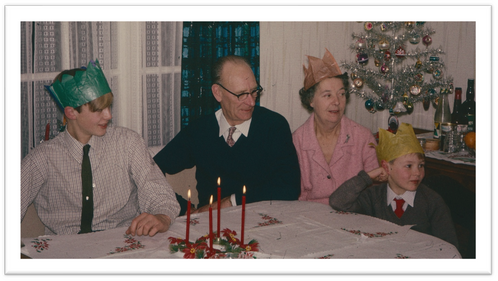
Photo by Anne Spratt on Unsplash
For many people, the Christmas season evokes warm memories of family and tradition. Even people who are hard and cynical sometimes become soft and tender at the thought of fond Christmas memories. Christmas traditions invite us to go back to the wonder of childhood, and we revel in those memories.
But not all people feel this way about Christmas.
For some people, the Christmas season brings back sharp and painful memories. For them, even the thought of carols and the feasts and time with loved ones opens up old wounds. They may not say it out loud because they don’t want to spoil the mood for everyone else, but it’s “Bah, humbug!” under their breath. Their pain is too deep.
For others, Christmas is bittersweet. Along with the warm and cheerful sentiments of the season, Christmas is also a painful reminder of loved ones who are gone from this world and will never again be part of those warm family scenes. And for those people, especially soon after they are bereaved, it is inconceivable that they could ever reconstitute the joy they once knew at Christmas.
But what if Christmas isn’t about nostalgia after all?
What if there’s something in the story of the birth of the Christ Child that is richer and deeper than our splendid traditions? When Paul wrote to the church in Philippi about the coming of Christ, he didn’t speak in nostalgic and sentimental terms. He struck a stirring, triumphant note, singing not only about Christ’s first coming as a baby but also about the Good News of His ultimate victory and glory:
But not all people feel this way about Christmas.
For some people, the Christmas season brings back sharp and painful memories. For them, even the thought of carols and the feasts and time with loved ones opens up old wounds. They may not say it out loud because they don’t want to spoil the mood for everyone else, but it’s “Bah, humbug!” under their breath. Their pain is too deep.
For others, Christmas is bittersweet. Along with the warm and cheerful sentiments of the season, Christmas is also a painful reminder of loved ones who are gone from this world and will never again be part of those warm family scenes. And for those people, especially soon after they are bereaved, it is inconceivable that they could ever reconstitute the joy they once knew at Christmas.
But what if Christmas isn’t about nostalgia after all?
What if there’s something in the story of the birth of the Christ Child that is richer and deeper than our splendid traditions? When Paul wrote to the church in Philippi about the coming of Christ, he didn’t speak in nostalgic and sentimental terms. He struck a stirring, triumphant note, singing not only about Christ’s first coming as a baby but also about the Good News of His ultimate victory and glory:
Though he was in the form of God,
he did not count equality with God a thing to be grasped,
but he emptied himself by taking the form of a servant,
being born in the likeness of men.
And being found in human form, he humbled himself
by becoming obedient to the point of death,
even death on a cross.
Therefore God has highly exalted him
and bestowed on him the name that is above every name,
so that at the name of Jesus every knee should bow,
in heaven and on earth and under the earth,
and every tongue confess that Jesus Christ is Lord,
to the glory of God the Father.
(from Paul’s letter to the church in Philippi)
he did not count equality with God a thing to be grasped,
but he emptied himself by taking the form of a servant,
being born in the likeness of men.
And being found in human form, he humbled himself
by becoming obedient to the point of death,
even death on a cross.
Therefore God has highly exalted him
and bestowed on him the name that is above every name,
so that at the name of Jesus every knee should bow,
in heaven and on earth and under the earth,
and every tongue confess that Jesus Christ is Lord,
to the glory of God the Father.
(from Paul’s letter to the church in Philippi)
Scholars think that his soaring rhetoric in his letter was a well-known Christian hymn. When he quotes these lovely words about Christ’s humility in becoming a man and submitting himself to death, and when he trumpets the news of His glorious triumph over death in his Resurrection from the dead, Paul is singing!
In God’s invasion of human history, Paul wants us to see not just His gracious humility but also His glorious triumph over the powers of death and hell. In other words, the Good News we celebrate at Christmas is not that we will overcome because of our virtue. It’s not even about how we will triumph because of our good intentions.
The Good News is not about our victory at all; it is about how Jesus has already won the victory.
His triumph over the power of sin and death is Good News that makes the birth of our Savior a cause for celebration, even when we are in pain, even when we are sad, even when we fail. We can celebrate because we know that in our long battle with sin and death, the outcome is no longer in question.
Because the King has triumphed, we can persevere.
(There will be no Discipleship Weekly post for the next two weeks. Have a blessed Christmas.)
In God’s invasion of human history, Paul wants us to see not just His gracious humility but also His glorious triumph over the powers of death and hell. In other words, the Good News we celebrate at Christmas is not that we will overcome because of our virtue. It’s not even about how we will triumph because of our good intentions.
The Good News is not about our victory at all; it is about how Jesus has already won the victory.
His triumph over the power of sin and death is Good News that makes the birth of our Savior a cause for celebration, even when we are in pain, even when we are sad, even when we fail. We can celebrate because we know that in our long battle with sin and death, the outcome is no longer in question.
Because the King has triumphed, we can persevere.
(There will be no Discipleship Weekly post for the next two weeks. Have a blessed Christmas.)
Recent
We Don’t Just Walk in the Valley, We Live There Now
October 9th, 2026
Experimenting with Silence
October 2nd, 2026
There’s No Avoiding Pain for the Disciple
September 25th, 2026
How My Role in My Spiritual Formation Is Like Farming
September 18th, 2026
The “Normandy Invasion” of Human History
September 11th, 2026
Archive
2026
January
February
March
April
May
June
July
August
September
2025
January
February
March
April
May
July
August
September
October
November
2024
January
February
March
Categories
no categories